Having great personal style is not the same as owning a huge wardrobe. In fact, some of the most recognizable looks are built from a surprisingly limited number of colors, silhouettes, textures, and accessories repeated in thoughtful ways.
That repetition is what creates visual identity.
Research into personal clothing style suggests that style can relate to self-concept, including expressions of the “true,” “ideal,” and creative self. Other research has also explored clothing as a way people communicate aspects of identity to others.
This is where advanced personal style strategies for building a signature look become useful. Instead of chasing every trend, you identify the visual patterns that consistently make you feel comfortable, confident, and recognizably yourself.
A signature look does not mean wearing the same outfit forever. It means creating enough continuity that different outfits still feel connected.
The goal is simple: fewer random purchases, easier outfit decisions, and a wardrobe with a stronger personality.
1. Start by Studying What You Already Wear
Before buying anything new, study your current wardrobe.
Which outfits do you repeatedly choose when you want to feel confident? Which pieces receive the most wear? What do you own but constantly avoid?
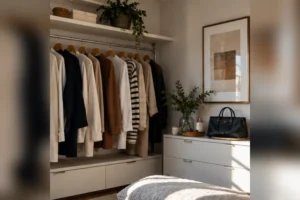
Wardrobe research treats clothing not only as individual objects but as items that function in relation to other garments and everyday practices. Looking at the wardrobe as a whole can reveal patterns that individual shopping decisions hide.
Take photos of outfits you genuinely wear for several weeks.
You may discover that you repeatedly choose wide trousers, structured shirts, monochromatic combinations, fitted jackets, oversized outerwear, or simple sneakers.
Those repetitions are valuable clues.
Do not start by asking, “What style should I have?”
Ask, “What visual choices am I already making when I feel most like myself?”
Your signature style may already exist. It simply needs editing.
2. Identify Your Signature Silhouette
Color often receives most of the attention in personal styling, but silhouette can be even more recognizable.
Silhouette is the overall shape created by your clothing.
Perhaps you prefer a narrow top with wide trousers. Maybe oversized jackets combined with straight-leg jeans feel natural. You might consistently choose long, flowing shapes or sharply tailored pieces.
Find two or three proportions that work particularly well for your lifestyle and preferences.
These become outfit formulas.
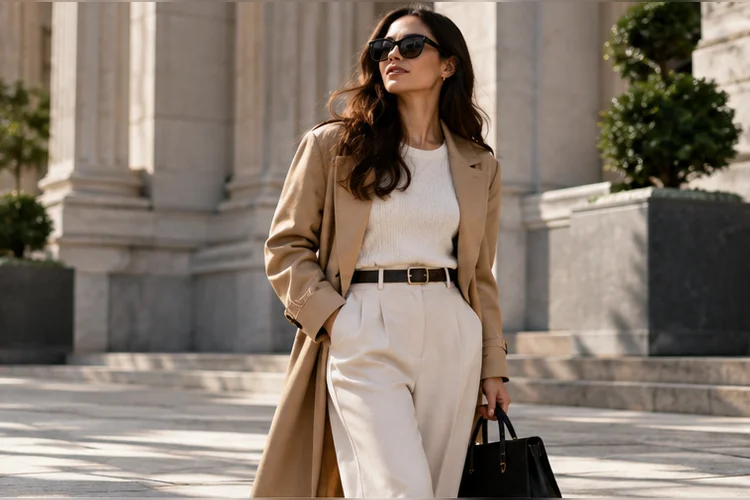
For example, one signature formula could be a fitted top, high-waisted wide trousers, and structured outerwear. Another might combine a loose shirt with straight pants and minimal shoes.
You can change fabric, color, pattern, and accessories while keeping the underlying silhoutte recognizable.
That gives you consistency without turning your wardrobe into a uniform.
3. Build a Personal Color System
A signature look becomes easier when colors cooperate.
You do not need an ultra-minimal neutral wardrobe, but random colors can make clothing harder to combine.
Start with several foundation colors you enjoy wearing. These might be black, navy, cream, brown, charcoal, olive, or another group that works naturally together.
Then add a smaller number of accent colors.
Maybe deep red becomes your recurring statement color. Perhaps cobalt blue, forest green, soft pink, or burnt orange appears in shirts, bags, scarves, or shoes.
Research suggests that clothing color can influence visual perception, although effects depend on factors such as context, skin tone, and the observer. There is no scientifically universal “best color” for everyone.
So treat color analysis as a tool, not a rigid law.
The best palette is the one you enjoy, can combine easily, and want to wear repeatedly.
4. Choose Several Wardrobe Anchors
Most memorable wardrobes have anchor pieces.
These are garments or accessories that appear frequently enough to become part of someone’s visual identity.
Think of a particular type of blazer, leather jacket, white shirt, watch, boots, glasses, denim cut, scarf, or jewelry.
Your anchors do not need to be unusual.
What makes them distinctive is repetition.
A black blazer becomes more identifiable when you repeatedly style it with similar proportions, colors, or accessories. Simple white sneakers can become part of a signature wardrobe when they consistently connect otherwise different outfits.
Choose several anchors that fit your actual life.
If you spend most of your week in casual environments, building a wardrobe around dramatic formal tailoring probably will not be sustainable.
Personal style works best when identity and everyday reality overlap. Research into clothing preference and identity has similarly found that comfort, confidence, and social context can all influence how people approach clothing choices.
5. Use Repetition Instead of Constant Novelty
Fashion culture can make repeating outfits feel undesirable.
For signature style, repetition is actually useful.
Nobody develops a recognizable visual identity by becoming a completely different person every morning.
Repeat your best combinations.
Wear the same trousers with five different tops. Style one jacket across casual and smarter outfits. Reuse the same shoes until they become visually associated with your look.
Personal style has been discussed not simply as following fashionable styles but as something connected with individual identity and continuity.
The key is consistant repetition with variation.
You can keep the same formula while changing one element.
For example, keep your usual dark trousers and structured jacket but introduce a patterned shirt. Maintain a monochrome outfit but change the texture. Use the same basic clothing while switching the bag or jewelry.
Recognition comes from continuity, not endless novelty.
6. Make Accessories Part of the Style Language
Accessories can turn basic clothing into something personal.
A simple white shirt and black trousers can communicate very different styles depending on whether they are combined with chunky silver jewelry, vintage leather, minimalist sneakers, a structured handbag, or colorful eyewear.
Choose a few accessory categories that feel natural to you.
Maybe your visual signature comes from watches and rings. Perhaps you repeatedly wear scarves, bold earrings, distinctive bags, hats, or particular glasses.
Avoid adding accessories just because an outfit looks “too simple.”
Instead, use them intentionally.
Ask whether the accessory reinforces your broader visual language.
When your clothes are relatively understated, recognizable acessories can carry much of your identity without making the wardrobe difficult to coordinate.
7. Use Texture to Add Depth Without Adding Chaos
A signature wardrobe does not need many prints or bright colors to remain interesting.
Texture can do much of the work.
Combine denim with smooth cotton, suede with wool, linen with leather, or matte materials with subtle shine.
Two completely black outfits can look dramatically different depending on whether one combines cotton, knitwear, and denim while another uses wool, leather, and silk-like surfaces.
This strategy is especially helpful if your preferred palette is neutral.
Texture creates visual contrast while preserving color consistency.
It also helps seperates intentional minimalism from an outfit that simply feels unfinished.
Pay attention to fabric weight too. Structured materials communicate differently from flowing fabrics, even when the garments share the same color.
8. Build Around a Wardrobe, Not Individual Purchases
A beautiful garment is not necessarily a useful purchase.
Before buying something, imagine at least three realistic outfits you could create with items you already own.
If nothing comes to mind, the piece may belong to a fantasy wardrobe rather than your real one.
This is where wardrobe thinking becomes valuable. Clothing works as part of a larger system rather than as isolated objects.
There is also growing interest in smaller, more deliberately curated wardrobes.
Recent research into sustainable fashion consumption has examined capsule wardrobe adoption alongside broader purchasing behaviors, although motivations and preferences vary between consumers.
You do not have to become a strict minimalist.
The useful principle is compatibility.
Your wardrobe becomes stronger when new purchases create more combinations rather than requiring five additional purchases before they become wearable.
9. Edit Your Signature Look as Your Life Changes
Personal style should evolve.
The clothes that worked during university may not suit your professional life. A career change, climate change, parenthood, travel, or simply getting older can shift what feels practical.
Do not confuse consistency with being permanently frozen.
Keep the visual ideas that still feel right and update how they are expressed.
Perhaps your signature sneakers become loafers. Graphic T-shirts become textured knitwear. Bright colors shift toward deeper shades while the overall silhouette remains familiar.
Personal style research emphasizes the relationship between clothing, self-concept, and identity, which helps explain why style can evolve as the person wearing it changes.
A strong signature look grows with you rather than becoming a costume from an earlier version of yourself.
Building a signature look is less about discovering one perfect aesthetic and more about recognizing the patterns that already make you feel like yourself.
Study what you actually wear. Identify your strongest silhouettes, create a practical color system, establish wardrobe anchors, repeat successful combinations, and use accessories and texture to add personality.
Most importantly, stop judging personal style by how many different outfits you can create.
Start by photographing your favorite looks for the next two weeks. Compare them and identify what keeps repeating.
Those recurring choices – rather than the latest trend – are often where your strongest personal style begins.