A wardrobe can contain dozens of beautiful clothes and still feel strangely difficult to use. You open the door, see plenty of options, and somehow conclude that you have nothing to wear.
Usually, the problem is not simply quantity. The clothes may not work together in terms of proportion, colour, or the way you actually live.
That is why building a wardrobe around proportion, colour, and lifestyle is more useful than collecting individual pieces simply because they look attractive in a store. Your strongest wardrobe is a system where garments support one another.
Wardrobe research takes a similar whole-system approach, examining how clothing relates to other clothing and to everyday practices rather than treating every garment as an isolated object.
The goal is not to create a perfectly minimal closet. It is to understand which silhouettes make you comfortable, which colours combine naturally, and which clothes deserve space because they genuinely support your daily life.
1. Start With Lifestyle Before Thinking About Fashion
Before buying another blazer, dress, or pair of shoes, look at how you actually spend your week.
Your wardrobe should reflect your real calendar.
If you work remotely four days a week, commute once, exercise regularly, and spend weekends casually, owning twenty formal outfits probably creates more clutter than value.
On the other hand, someone who attends frequent client meetings may genuinely need a stronger professional section.
Estimate how your time is divided.
Perhaps 50% of your clothing needs are casual, 30% relate to work, 10% to exercise, and 10% to social occasions. Those percentages do not need to be exact. They simply reveal where your wardrobe investment should go.
Many purchasing mistakes happen when people shop for an imaginary lifestyle rather than the one they actually live.
2. Understand Proportion Before Chasing Individual Pieces
Proportion is about how different clothing shapes relate to each other and to your overall appearance.
You do not need complicated mathematical rules.
Start by noticing which combinations consistently feel balanced. Maybe wide trousers work best for you with a shorter or more fitted top. Perhaps you prefer an oversized shirt with straight trousers rather than another oversized piece underneath.
Build Around Repeatable Silhouettes
Choose two or three outfit shapes that reliably work.
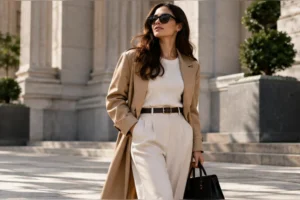
For example, one formula might be high-waisted trousers, a fitted knit, and structured outerwear. Another could combine straight jeans, a relaxed shirt, and simple shoes.
Once you identify a favorite silhoutte, shopping becomes easier.
You stop asking, “Is this item fashionable?” and start asking, “Does this piece work with the proportions I already wear?”
There is no universal silhouette that everyone must follow. Body shape, comfort, personal taste, cultural context, and lifestyle all influence what feels right.
The goal is not to correct your body. It is to understand the clothing proportions you enjoy seeing and wearing.
3. Create a Colour System, Not a Colour Prison
A coordinated wardrobe does not need to contain only black, white, beige, and navy.
What matters is compatibility.
Start by identifying several foundation colours that appear naturally throughout your wardrobe. These might be neutrals, but they could also include olive, burgundy, deep blue, chocolate brown, or another shade you regularly wear.
Then choose accent colours that work with those foundations.
For example, a wardrobe built around navy, cream, denim, and brown could easily incorporate forest green or burgundy without becoming difficult to coordinate.
Colour can influence how clothing and the body are visually perceived. One experimental study found differences in body-attractiveness and size judgments across clothing colours, with the results also influenced by skin tone.
However, the study involved a specific sample and should not be interpreted as proving universal colour rules for everyone.
Personal preference still matters most.
A useful colour palette should make dressing easier, not make you afraid of wearing a shade because someone declared it “wrong.”
4. Build Outfits Around Wardrobe Anchors
Most efficient wardrobes have anchor pieces.
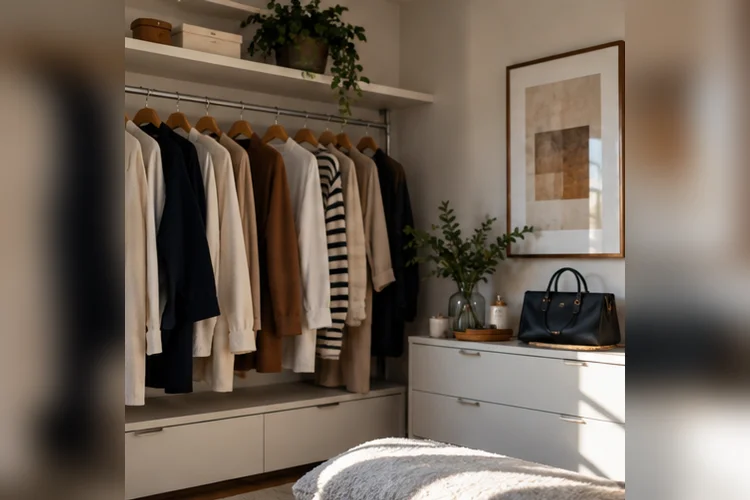
These are items you repeatedly use to build outfits: perhaps dark trousers, straight jeans, a blazer, a white shirt, neutral sneakers, loafers, or a versatile jacket.
Anchors provide structure.
If a pair of trousers works with eight tops, three jackets, and four pairs of shoes, it performs an important role in the wardrobe. A dramatic garment that matches only one specific outfit may still be worth owning, but it should be treated differently.
Start identifying your most useful pieces.
Then ask what makes them so easy to wear.
Maybe it is the colour, cut, fabric, comfort, or ability to move between casual and smarter settings.
Those characteristics can guide future purchases more effectively than seasonal trend lists.
5. Think in Outfit Families Instead of Individual Garments
One common shopping mistake is falling in love with an item without considering what will happen after you bring it home.
Instead, think in outfit families.
Suppose you are considering a green jacket. Before buying it, imagine how it works with trousers, shirts, shoes, and acessories you already own.
Can you create at least three realistic outfits?
If yes, the garment probably strengthens your wardrobe. If it requires new trousers, a different pair of shoes, and another bag before you can comfortably wear it, the purchase may create more problems than it solves.
Wardrobe studies specifically emphasize understanding clothes through their relationships with other garments and everyday practices.
Compatibility creates options.
The more pieces that naturally work together, the less clothing you need to create variety.
6. Dress for Your Real Climate and Daily Movement
Lifestyle includes more than occupation.
Climate matters. Transportation matters. Walking habits matter. Even how often you encounter air conditioning matters.
Someone living in a warm, humid climate may benefit from breathable fabrics, lightweight layers, and clothing that remains comfortable after walking outdoors.
A person who commutes by motorcycle, bicycle, or public transport may need different footwear and outerwear than someone who drives directly into an office parking garage.
Think about movement too.
Can you sit comfortably for several hours? Walk quickly? Carry a bag? Reach overhead? Move between indoor and outdoor spaces?
A wardrobe can look visually perfect but become impractical if it constantly needs adjusting.
Real personal style lives in motion, not only in front of a mirror.
7. Use Repetition as Data
Pay attention to what you wear repeatedly.
Those garments are giving you valuable information.
If the same trousers leave your wardrobe twice every week while another pair remains untouched for six months, investigate why.
Maybe the frequently worn pair has better pockets, softer fabric, easier proportions, or a more versatile colour.
Repeated wear helps reveal the difference between what you admire and what you genuinely enjoy using.
Research into sustainable clothing use emphasizes that what happens after purchase – including how garments are worn, maintained, and kept in use – is an important part of clothing longevity.
Another 2024 study examined how personal factors such as style orientation, frugality, and trend sensitivity relate to sustainable clothing-use practices.
Instead of feeling guilty about repeating outfits, treat repetition as evidence that your wardrobe system is working.
8. Use Cost Per Wear as a Reality Check
Price alone does not tell you whether clothing represents good value.
Imagine a jacket costing $200 that you wear 100 times. Its simple cost per wear is $2.
Now compare it with a trendy $40 shirt worn twice before being forgotten. Its cost per wear is already $20.
Cost per wear is not a perfect financial formula because it ignores maintenance, resale value, emotional value, and other factors. Still, it can help shift attention from purchase price toward actual usage.
This mindset encourages you to consider comfort, versatility, durability, and how naturally a garment fits your lifestyle.
Research into capsule wardrobes and sustainable fashion consumption also suggests that consumers approach smaller or more curated wardrobes for different reasons, including practical and sustainability-related motivations.
A 2026 mixed-methods study in the Czech Republic, for example, examined capsule wardrobe adoption using a nationally representative survey of 1,100 people alongside interviews and focus groups.
The point is not to own less at any cost.
It is to buy with greater intention.
9. Leave Space for Personality
A practical wardrobe should never become so optimized that it loses character.
Efficiency is only one part of personal style.
Keep the strange vintage jacket you love. Wear the unexpected colour. Own shoes that are not the most versatile choice in the world if they make your outfits feel more like you.
The trick is seperation between wardrobe foundations and expressive pieces.
Your foundations create consistency. Statement pieces create personality.
If most of the wardrobe works together easily, you gain freedom to experiment without turning every purchase into a styling problem.
A consistant personal style is not repetitive because every item looks identical. It is recognizable because different pieces still feel connected to the same person.
Building a useful wardrobe is less about owning the “right” clothes and more about creating relationships between proportion, colour, and real-life needs.
Start with your lifestyle. Identify the silhouettes you repeatedly enjoy, develop a flexible colour palette, recognize your strongest wardrobe anchors, and buy new pieces based on how well they connect with clothes you already own.
Then pay attention to what actually gets worn.
Your most repeated outfits can teach you far more than another trend forecast.
Open your wardrobe this week and choose your ten most-used pieces. Look for common shapes, colours, fabrics, and functions. Those patterns are the foundation for a wardrobe that becomes easier to use, more personal, and more valuable over time.