
Grace Mitchell

How Seasonal Ingredients Improve Everyday Home Cooking

How Seasonal Ingredients Improve Everyday Home Cooking

Home cooking becomes much easier when you stop expecting the same ingredients to perform equally well all year. A tomato that tastes fantastic during its natural growing season may inspire an entire meal, while the same recipe can feel strangely flat when the main ingredient is disappointing. That is where seasonal cooking becomes useful. Understanding how seasonal ingredients can improve everyday home cooking is not about following a strict agricultural calendar or refusing anything grown outside your region. It simply ...
Culinary Planning Strategies for Better Variety Without Waste

Culinary Planning Strategies for Better Variety Without Waste

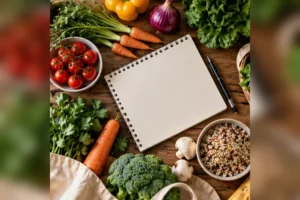
Eating a varied diet sounds simple until grocery day arrives. You buy ingredients for five different recipes, use half of them, change your plans midweek, and eventually discover forgotten herbs and vegetables hiding at the back of the refrigerator. Variety can easily create waste when every meal requires a completely different set of ingredients. That is why culinary planning strategies for better variety without waste focus less on cooking dozens of unrelated dishes and more on creating smart connections between ...

Building a Flexible Home Cooking System for Busy Weeks

Building a Flexible Home Cooking System for Busy Weeks

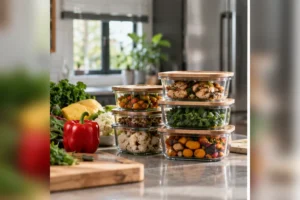
Busy weeks have a predictable way of destroying ambitious cooking plans. Monday starts with good intentions, Tuesday gets crowded with work, and by Thursday the vegetables you planned to cook are still sitting untouched in the refrigerator. The problem is often not a lack of cooking ability. It is that the system depends on having enough time, energy, and motivation every evening. Building a flexible home cooking system for busy weeks takes a different approach. Instead of planning seven complicated ...

How Meal Structure Influences Energy and Daily Satisfaction

How Meal Structure Influences Energy and Daily Satisfaction

Have you ever eaten a large meal and somehow felt hungry again two hours later? Or finished lunch feeling so heavy that getting through the afternoon suddenly became a challenge? What you eat matters, but the way a meal is structured matters too. How meal structure influences energy and daily satisfaction comes down to several connected factors: protein, carbohydrates, fiber, fats, food quality, portion size, timing, and how satisfying the meal feels in real life. No single formula works perfectly ...

Advanced Culinary Habits for More Intentional Everyday Eating

Advanced Culinary Habits for More Intentional Everyday Eating

Eating more intentionally does not mean turning every meal into a nutrition calculation or spending Sunday afternoon preparing twenty identical containers of chicken and rice. It is really about creating a better relationship between cooking, planning, appetite, enjoyment, and everyday decisions. Advanced culinary habits for more intentional everyday eating can make food feel less chaotic. Instead of deciding what to eat when you are already exhausted and hungry, you build simple systems that make good meals easier to prepare and ...

How Clothing Choices Influence Confidence and Self-Perception

How Clothing Choices Influence Confidence and Self-Perception

Most of us have experienced it: you put on an outfit that feels completely right, look in the mirror, and somehow stand a little taller. On another day, uncomfortable trousers or a shirt that feels “wrong” can make you unusually self-conscious. Clothing obviously cannot create confidence from nothing. Self-esteem is shaped by many factors, including relationships, experiences, health, skills, social environment, and personal beliefs. Still, what we wear can become part of how we see and present ourselves. Research into ...

Personal Style Systems for Professionals With Busy Schedules

Personal Style Systems for Professionals With Busy Schedules

A busy morning is a terrible time to make complicated fashion decisions. You are checking messages, thinking about meetings, looking for your keys, and suddenly standing in front of a full wardrobe wondering why nothing seems to work together. The problem may not be your clothes. It may be the lack of a system. Personal style systems for professionals with busy schedules turn getting dressed from a daily creative challenge into a repeatable process. Instead of building every outfit from ...

Building a Wardrobe Around Proportion, Colour, and Lifestyle

Building a Wardrobe Around Proportion, Colour, and Lifestyle

A wardrobe can contain dozens of beautiful clothes and still feel strangely difficult to use. You open the door, see plenty of options, and somehow conclude that you have nothing to wear. Usually, the problem is not simply quantity. The clothes may not work together in terms of proportion, colour, or the way you actually live. That is why building a wardrobe around proportion, colour, and lifestyle is more useful than collecting individual pieces simply because they look attractive in ...

How to Develop Personal Style Beyond Seasonal Fashion Trends

How to Develop Personal Style Beyond Seasonal Fashion Trends

Fashion trends move fast. One season everyone wants oversized tailoring, the next it is ultra-slim silhouettes, a specific sneaker, a particular shade of brown, or an aesthetic that suddenly appears everywhere on social media. Following trends can be fun. The problem starts when your wardrobe becomes a collection of temporary personalities. Developing personal style beyond seasonal fashion trends means learning which colors, shapes, fabrics, proportions, and details consistently feel right for you. Research into personal clothing style suggests that style ...

Advanced Personal Style Strategies for Building a Signature Look

Advanced Personal Style Strategies for Building a Signature Look

Having great personal style is not the same as owning a huge wardrobe. In fact, some of the most recognizable looks are built from a surprisingly limited number of colors, silhouettes, textures, and accessories repeated in thoughtful ways. That repetition is what creates visual identity. Research into personal clothing style suggests that style can relate to self-concept, including expressions of the “true,” “ideal,” and creative self. Other research has also explored clothing as a way people communicate aspects of identity ...