Eating a varied diet sounds simple until grocery day arrives. You buy ingredients for five different recipes, use half of them, change your plans midweek, and eventually discover forgotten herbs and vegetables hiding at the back of the refrigerator.
Variety can easily create waste when every meal requires a completely different set of ingredients.
That is why culinary planning strategies for better variety without waste focus less on cooking dozens of unrelated dishes and more on creating smart connections between meals.
The same vegetables, grains, proteins, herbs, and sauces can appear in different combinations without making dinner feel repetitive.
This matters beyond household convenience. UNEP estimated that 1.05 billion tonnes of food were wasted globally in 2022, with households responsible for around 60% of that total.
You do not need an extreme zero-waste kitchen to make a difference.
A little planning can give you more variety, reduce unnecessary purchases, and make cooking considerably easier during the week.
1. Plan Around Ingredient Overlap
The easiest way to create variety without buying too much is to let several meals share ingredients.
Suppose you buy spinach, tomatoes, chicken, rice, yogurt, onions, and herbs.
Those ingredients could become a rice bowl one evening, wraps the next day, and a simple curry or salad later in the week.
The meals feel different even though much of the grocery list stays the same.
Harvard’s meal-prep guidance recommends planning food ahead and preparing versatile ingredients that can be used across multiple meals. It also notes that meal preparation can save time, reduce stress, and support more balanced eating.
Think of your grocery list as a network rather than a collection of isolated recipes.
The more jobs each ingredient can perform, the lower the chance it becomes waste.
2. Use a Meal Rotation Instead of Planning From Zero
Weekly meal planning becomes tiring when you try to invent something completely new every seven days.
Create a loose rotation instead.
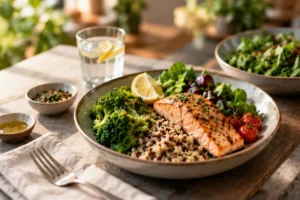
For example, one evening could usually be a rice or grain bowl, another a pasta dish, another soup or curry, and another a quick stir-fry.
The structure stays familiar while the ingredients change.
This gives you variety without requiring constant creativity.
One week, your grain bowl might include chicken and roasted vegetables. The next week, it could feature beans, corn, avocado, and a different sauce.
Harvard suggests themed meal days as one way to simplify planning while still leaving room for variety.
A consistant framework reduces decision fatigue without making dinner predictable in a boring way.
3. Shop Your Kitchen Before Shopping the Store
One of the simplest food-waste strategies is checking what you already own.
Look through the refrigerator, freezer, and pantry before writing a grocery list.
The EPA specifically recommends checking existing food first and planning upcoming meals around ingredients that need to be used. It also suggests making a weekly list based on meals you genuinely expect to prepare.
Maybe there are two carrots, half a cabbage, cooked rice, and an open jar of sauce.
That is not random clutter. It is the beginning of dinner.
Create a “Use First” Zone
Choose one visible area in your refrigerator for ingredients that should be eaten soon.
Place older vegetables, opened products, or leftovers there instead of letting them disappear behind newer groceries.
Harvard also recommends a first-in, first-out approach and keeping older foods toward the front.
Visibility is part of food maintanance.
You are much more likely to use something when you remember it exists.
4. Buy Flexible Ingredients With Multiple Roles
Some ingredients are naturally more useful than others.
Eggs can become breakfast, fried rice, sandwiches, or a quick dinner. Yogurt can work with fruit, become a sauce, or support a marinade.
Beans can go into soups, salads, wraps, curries, or grain bowls.
Frozen vegetables are another useful option because they can stay available longer and be added to many meals without requiring a precise plan.
The goal is not to buy only basic foods.
It is to balance specialty ingredients with flexible staples.
If every ingredient on your grocery list exists for only one recipe, one schedule change can leave half the week’s food without a purpose.
A flexible pantry gives ingredients alternative destinations.
5. Create Variety Through Sauces, Spices, and Texture
Variety does not always require completely different main ingredients.
Changing flavor can make familiar foods feel new.
Roasted vegetables and rice might feel Mediterranean with lemon, herbs, and yogurt. The same base could move in another direction with soy sauce, ginger, sesame, and chili.
Another night, curry spices and coconut milk can transform the combination again.
Texture matters too.
Add toasted nuts, seeds, crunchy vegetables, fresh herbs, pickles, or crispy toppings to change how a familiar meal feels.
This approach reduces the need to buy completely different ingredients for every cuisine you want to enjoy.
A small collection of sauces, spices, acids, and seasonings creates culinary flexibility without filling the refrigerator with highly specific products.
Good preperation is often more about having flavor options than preparing entire finished meals.
6. Plan Leftovers Before You Create Them
Leftovers become waste when they have no future purpose.
Before cooking a large meal, decide where the extra portions are going.
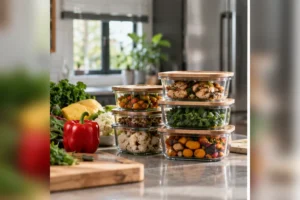
Tonight’s roasted chicken might become tomorrow’s sandwich. Extra beans could go into soup. Leftover rice can become fried rice or a quick grain bowl.
The EPA recommends repurposing leftovers and less-than-perfect ingredients in dishes such as soups, casseroles, stir-fries, sauces, and smoothies.
This is different from simply reheating the exact same plate three nights in a row.
You are transforming components.
That keeps variety high while still using what has already been prepared.
Food safety matters, though. FoodSafety.gov recommends refrigerating cooked leftovers promptly and using most refrigerated leftovers within three to four days.
If you will not eat them soon, freezing is usually the smarter option.
7. Use the Freezer to Protect Variety
A freezer allows you to create variety across several weeks rather than forcing yourself to finish everything immediately.
If you cook six portions of soup, there is no requirement to eat soup for six consecutive meals.
Keep two portions in the refrigerator and freeze the rest.
Next week, freeze leftover curry. The week after that, freeze pasta sauce.
Soon you have several different homemade meals ready to rotate.
FoodSafety.gov notes that continuously frozen food kept at 0°F (-18°C) can remain safe indefinitely, although recommended freezer times are mainly about maintaining quality.
Label containers clearly with the food and date.
Without labels, a freezer eventually becomes a collection of mysterious objects nobody wants to thaw.
A useful freezer creates options. A forgotten freezer simply delays food waste.
8. Match Portions to the People Actually Eating
Cooking too much can feel efficient, but only if the food gets eaten.
The EPA recommends considering the right portions for the number of people being served.
Pay attention to your household’s real consumption.
If a recipe consistently produces six portions but your household usually finishes only four before losing interest, reduce the recipe next time or intentionally freeze the extra portions immediately.
The same principle applies when shopping.
A large package is not automatically economical if part of it is regularly discarded.
Sometimes buying a smaller amount at a slightly higher unit price creates better value because you actually use everything.
Food planning should reflect real appetite rather than optimistic assumptions.
9. Keep One Flexible Meal at the End of the Week
Do not plan every meal too tightly.
Leave one dinner intentionally open.
This becomes your “use what is left” meal.
Open the refrigerator and build dinner around ingredients that still need attention. It might become soup, pasta, fried rice, omelets, wraps, pizza, or a mixed grain bowl.
This creates a buffer between your plan and real life.
Schedules change. People unexpectedly eat out. Someone may not be home for dinner.
A flexible meal absorbs those changes instead of allowing unused ingredients to accumulate.
UNEP’s 2024 report highlights the scale of food waste worldwide, with households accounting for 631 million tonnes of food waste in 2022.
Reducing waste does not require perfect forecasting.
It often requires leaving enough flexibility to adapt when the forecast is wrong.
Better culinary planning does not mean eating the same food every day or turning your kitchen into a strict inventory system.
The smarter approach is to create variety through overlapping ingredients, rotating meal formats, flexible staples, sauces, leftovers, and freezer meals.
Shop your kitchen before the store, keep older foods visible, and plan how extra portions will be used before cooking them.
Start with one simple change this week.
Choose three meals that share at least four ingredients, then make one dinner intentionally flexible so you can use whatever remains.
Variety and low waste are not opposites. With a little planning, the same grocery basket can support several very different meals – and far less food needs to end up in the bin.