Busy weeks have a predictable way of destroying ambitious cooking plans. Monday starts with good intentions, Tuesday gets crowded with work, and by Thursday the vegetables you planned to cook are still sitting untouched in the refrigerator.
The problem is often not a lack of cooking ability. It is that the system depends on having enough time, energy, and motivation every evening.
Building a flexible home cooking system for busy weeks takes a different approach. Instead of planning seven complicated dinners, you create ingredients, pantry staples, backup meals, and leftovers that can move between different dishes.
Harvard’s Nutrition Source notes that meal preparation can save time, reduce last-minute decisions, and support more balanced eating, while also emphasizing that there is no single correct method because schedules and preferences differ.
The goal is not to meal-prep your entire life into identical containers. It is to make home cooking easier to continue when your schedule becomes unpredictable.
1. Plan Around Your Calendar Before Choosing Recipes
The best meal plan starts with your schedule, not your recipe collection.
Look at the coming week before deciding what to cook.
If Monday and Tuesday are packed with meetings, those are probably not the right evenings for a complicated new recipe. Save longer cooking projects for quieter days and use quick meals or leftovers when time is limited.
USDA MyPlate specifically recommends considering available time when planning weekly meals and saving more complicated dishes for days when you have greater flexibility.
Try dividing the week into three types of nights: normal cooking nights, quick assembly nights, and emergency nights.
This immediately makes the plan more realistic.
Instead of expecting yourself to cook from scratch every evening, you already know that Wednesday may be a reheated soup night while Saturday can handle something more ambitious.
2. Prep Components Instead of Seven Complete Meals
Traditional batch cooking often means preparing several identical meals in advance.
That works for some people, but others become bored by day three.
A more flexible approach is component cooking.
Prepare ingredients that can be recombined.
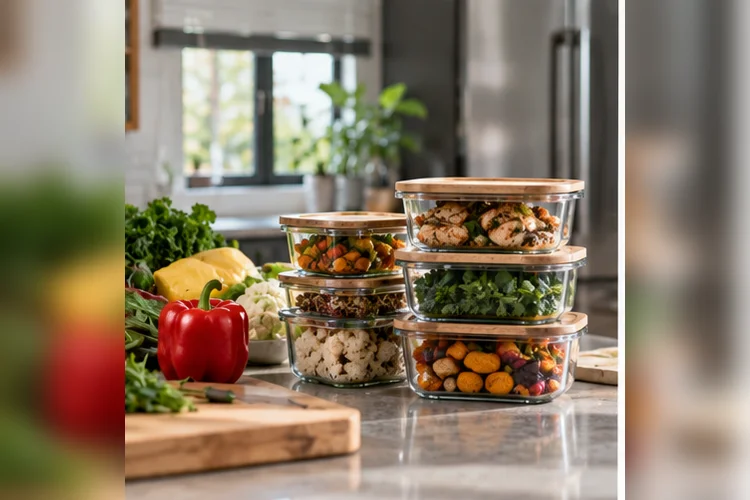
Cook a pot of rice or another grain, roast vegetables, prepare one protein, wash greens, and make a versatile sauce. Those components might become a rice bowl on Monday, wraps on Tuesday, and a quick stir-fry later in the week.
Harvard’s meal-prep guidance recommends prioritizing foods that take longer to cook, such as grains, proteins, legumes, and roasted vegetables, while also preparing useful staples like washed greens or cooked beans.
This type of preperation gives you structure without locking you into an exact menu.
You are preparing possibilities rather than finished decisions.
3. Build a Pantry That Can Rescue Dinner
A flexible cooking system needs reliable backup ingredients.
Your pantry and freezer should contain foods that can turn into a meal without a special shopping trip.
Think canned beans, lentils, tomatoes, pasta, rice, oats, canned fish, herbs, spices, broth, frozen vegetables, eggs, and a few sauces you regularly use.
Harvard recommends keeping frequently used shelf-stable foods such as grains, beans, sauces, healthy oils, herbs, and spices available for meal preparation.
Frozen ingredients are especially useful.
CDC guidance notes that frozen, dried, and canned vegetables and fruits can all contribute to nutritious meals, with attention to added sugars and sodium where relevant.
The point is not to stock an enormous emergency bunker.
Keep enough familiar ingredients to create three or four meals without thinking too hard.
That turns “there is nothing to cook” into “I can make pasta with beans and vegetables in twenty minutes.”
4. Create Three Emergency Meals
Every home cooking system needs a plan for the days when cooking motivation reaches zero.
These meals should be almost embarrassingly easy.
Maybe your first backup is eggs, frozen vegetables, and rice. Another could be pasta with canned tomatoes, beans, and herbs. A third might be soup, whole-grain bread, and a simple salad.
The exact meals do not matter.
What matters is knowing they exist before you become hungry.
CDC says that planning meals at home can improve food choices and help people avoid relying as heavily on less healthy drive-through options.
Emergency meals are particularly useful because they prevent the all-or-nothing mindset.
You are not choosing between a perfectly cooked dinner and total failure.
A ten-minute meal is still home cooking.
5. Turn Leftovers Into Planned Ingredients
Leftovers are often treated as accidental food from yesterday.
A better system gives them a future job.
If you roast chicken tonight, plan chicken sandwiches or a grain bowl tomorrow. Extra roasted vegetables can go into eggs, pasta, soup, or wraps.
MyPlate actively recommends planning larger meals with enough portions for leftovers so busy-day meals can become simple reheating jobs.
The trick is making leftovers visible.
Transparent containers help. So does keeping older food toward the front of the refrigerator.
Harvard’s meal-prep guidance recommends dating prepared foods and rotating older meals toward the front so they are used before newer items.
You can also keep a small “eat first” area in the refrigerator.
That makes leftover management part of the system rather than an archaeological expedition every Sunday.
6. Use the Freezer as a Time Machine
Your freezer is one of the most valuable tools for busy-week cooking.
Whenever you prepare a meal that freezes well, consider making an extra portion.
Soups, stews, curries, cooked beans, sauces, and many casseroles can become future emergency dinners.
Label containers with the food name and date. Otherwise, three months later you may have several mysterious frozen blocks that nobody wants to investigate.
FDA guidance says foods kept continuously frozen at 0°F (-18°C) remain safe indefinitely, although quality declines over time.
Freezing also lets you create variety.
Instead of eating the same curry four nights in one week, eat it once, refrigerate another portion for lunch, and freeze the rest.
Two weeks later, future-you gets dinner without cooking.
That is the kind of culinary flexability that makes a busy-week system sustainable.
7. Follow Simple Food-Safety Rules
Flexible cooking should never mean careless food storage.
Perishable foods and leftovers need appropriate refrigeration.
USDA recommends refrigerating leftovers promptly, keeping the refrigerator at 40°F (4°C) or below, and generally using refrigerated leftovers within three to four days.
Large batches should be divided into shallow containers so they cool more quickly.
Do not leave perishable foods sitting at room temperature for more than two hours, or one hour when temperatures are above 90°F (32°C).
You should also avoid overcrowding the refrigerator because cold air needs room to circulate effectively.
These rules may sound boring compared with recipes, but food safety is part of good kitchen organization.
A flexible system only works when yesterday’s food is still safe tomorrow.
8. Shop for Flexible Ingredients, Not Aspirational Recipes
One common grocery mistake is buying ingredients for the person you hope to become this week.
You buy ingredients for five complicated recipes, then reality arrives.
Instead, build most of your shopping list around ingredients you already know how to use.
USDA recommends checking the refrigerator, freezer, and cupboards before shopping, then building the weekly plan around both what is already available and what needs to be purchased.
Try buying flexible ingredients that can appear in multiple dishes.
Spinach might work in eggs, pasta, soup, or sandwiches. Yogurt can become breakfast, a snack, or a sauce. Beans can go into salads, rice bowls, soups, or wraps.
The more jobs an ingredient can perform, the lower the risk that it ends up forgotten.
This is especially useful for fresh food with a short shelf life.
9. Create a Weekly Kitchen Reset
Flexible systems still need occasional maintanance.
Once a week, spend ten minutes checking what is available.
Look at produce that needs to be used soon. Check leftovers. Notice freezer portions running low and write down pantry staples that need replacing.
You can also ask what worked during the previous week.
Did you prepare too much rice? Did one emergency meal save Wednesday night? Did you repeatedly avoid cooking a certain ingredient?
Use that information.
A good home cooking system should change with your behavior rather than forcing you to follow a perfect schedule forever.
Over time, you will develop a small collection of dependable meals, ingredients, and preparation habits that work almost automatically.
That consistant rhythm matters more than preparing an Instagram-perfect refrigerator every Sunday.
A flexible home cooking system works because it accepts that busy weeks are unpredictable.
Instead of relying on daily motivation, plan around your calendar, prepare versatile components, maintain a useful pantry, keep emergency meals available, and give leftovers a clear purpose.
Use the freezer strategically and follow basic food-safety practices so prepared food remains useful rather than becoming waste.
Start small this week.
Choose three flexible ingredients, one emergency dinner, and one meal worth making extra portions of. That is enough to begin.
The best cooking system is not the one that produces the most impressive meal prep. It is the one that still helps you eat at home on the evening when everything else runs late.