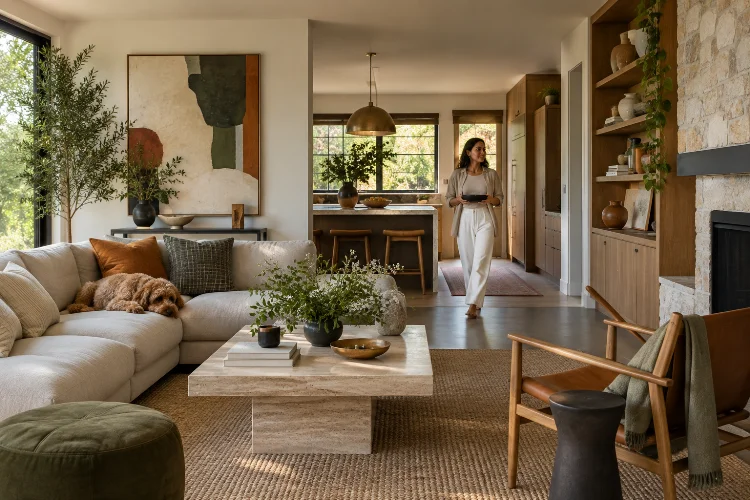
A home can look incredible in photographs and still be frustrating to live in. Maybe the beautiful coffee table constantly blocks the walkway, the open shelves collect clutter, or the carefully styled kitchen has almost nowhere to prepare dinner.
On the other hand, a highly practical home can sometimes become so focused on efficiency that it loses personality.
The real challenge is finding the middle ground.
Creating functional homes without sacrificing visual identity means designing spaces that support everyday routines while still reflecting personal taste. Function and style do not need to compete. In thoughtful interiors, they actually strengthen each other.
The American Institute of Architects emphasizes that good design should support comfort, health, movement, accessibility, natural light, and user control while still considering the wider architectural experience.
The goal, then, is not to make every room perfectly minimal or visually dramatic. It is to create a home that works naturally, feels unmistakably yours, and can continue adapting as life changes.
1. Begin With How the Home Actually Functions
Before choosing colors, furniture, or decorative objects, study what happens in each room.
Where do bags land when people arrive home? Where are laptops normally used? Which surfaces become cluttered? Where do people naturally gather?
These everyday patterns reveal more about functional design than a mood board ever could.
For example, if everyone leaves shoes beside the entrance, the solution is probably not telling people to become more organized. It is designing storage exactly where the behavior already occurs.
A funcional home works with human habits rather than constantly fighting them.
Once those practical needs are understood, visual decisions become easier. Storage can be designed as part of the architecture, furniture can support natural movement, and decorative features can occupy areas where they will not interfere with everyday use.
2. Create a Strong Visual Identity With Fewer Decisions
Visual identity does not mean filling every room with dramatic features.
In fact, the most recognizable interiors often rely on a limited number of repeated ideas.
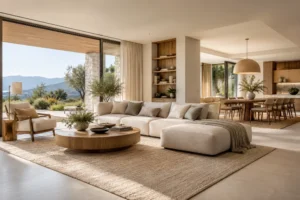
You might use warm timber throughout the home, repeat curved furniture shapes, choose a muted earthy palette, or consistently combine black metal with natural stone.
Repetition creates coherence.
Instead of buying individual items simply because they look attractive, ask whether they belong to the same visual language.
Build a Simple Design Vocabulary
Choose several elements that define the personality of the home: perhaps three main colors, two dominant materials, and one recognizable form or texture.
That framework makes shopping easier because every new item has something to relate to.
The result does not have to look perfectly matched. Some contrast keeps rooms interesting.
What matters is that the home feels intentional rather than like a collection of unrelated trends.
3. Use Storage as Part of the Design
Storage is often treated as something purely practical, but it can become one of the strongest visual features in a room.
Built-in cabinetry, shelving, window seats, media units, and wardrobes can all contribute to the architectural identity of the home.
The key is deciding what should remain visible.
Books, ceramics, artwork, and meaningful objects may deserve open display. Chargers, paperwork, cleaning supplies, toys, and daily clutter usually benefit from closed storage.
This balance prevents the room from becoming visually overloaded without removing personality.
A custom cabinet painted in the wall color can almost disappear, while timber shelves can become a deliberate focal point. Storage therefore creates seperation between items that add character and objects that mainly create visual noise.
Good storage is not about hiding your life. It is about choosing what gets visual attention.
4. Let Furniture Support Both Movement and Style
Furniture is where function and identity meet most directly.
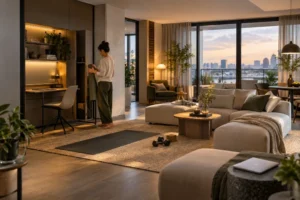
A sculptural chair can look beautiful, but if nobody enjoys sitting in it, it becomes decoration rather than useful furniture. Similarly, an enormous sofa may be comfortable but make circulation awkward in a smaller room.
Start with proportion.
Leave clear pathways between major zones and avoid forcing people to move around furniture unnecessarily. The AIA’s design guidance highlights logical circulation and spaces that support comfortable movement as part of healthier built environments.
Universal design principles also encourage environments that accommodate different users, minimize physical effort, and provide appropriate space for approach and movement.
None of this requires boring furniture.
You can still use bold upholstery, unusual silhouettes, vintage pieces, or custom designs. Just make sure that visual impact is not achieved by making daily movement harder.
5. Use Lighting to Strengthen the Character of Each Room
Lighting does more than make objects visible.
It changes texture, color, contrast, atmosphere, and the way architectural details are perceived.
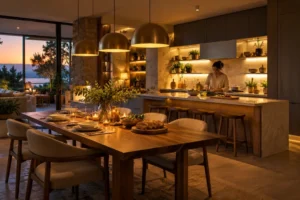
A pendant light over a dining table can become a visual anchor. Hidden LED lighting can emphasize shelving or wall textures. Table lamps can make a living room feel warmer without changing any furniture.
WELL lighting guidance emphasizes appropriate illumination, visual comfort, and support for everyday activities rather than relying on one lighting condition everywhere.
Natural light should also influence layout.
The U.S. Department of Energy notes that strategic daylighting uses windows and skylights to bring natural illumination into buildings while considering glare and heat.
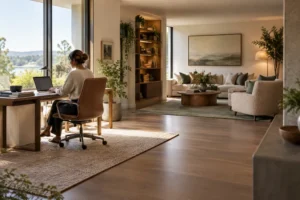
Design frequently used areas around good daylight where possible, then use artificial lighting in layers.
The best lighting enviroment helps the room function while also reinforcing its personality.
6. Choose Materials for Beauty and Everyday Reality
Materials are a major part of visual identity, but they also determine how difficult a home is to maintain.
A surface that looks beautiful on installation day may become frustrating if it stains easily, scratches quickly, or requires constant cleaning.
Think about who uses the room.
A family kitchen, for example, may benefit from durable worktops and easy-to-clean finishes. A quieter formal space can accommodate more delicate materials.
Indoor health is worth considering too. The U.S. Environmental Protection Agency notes that building materials, furnishings, ventilation, temperature, and humidity can all influence indoor air quality.
Material selection therefore involves more than aesthetics.
Look for the intersection between texture, durability, maintenance, comfort, and suitability for the room.
Natural timber, stone, metal, textiles, plaster, or tile can all create strong character when used intentionally rather than simply following whatever material happens to be fashionable.
7. Design for Change Without Losing Personality
Homes rarely serve exactly the same purpose forever.
A spare bedroom may become an office. Children grow older. A dining area may become a study zone during the week. Mobility needs can also change over time.
Current residential design trends reflect growing interest in flexible and adaptable accommodations. In its September 2026 Home Design Trends Survey, the AIA reported continued homeowner interest in maximizing space while maintaining flexibility.
That flexibility does not require making every room neutral.
Personality can come from elements that are easier to change: artwork, lighting, textiles, rugs, smaller furniture, paint, and decorative objects.
Keep harder-to-change components reasonably adaptable.
Built-in storage, circulation routes, electrical layouts, and major furniture placement should allow the room to evolve.
A consistant visual language can then connect the home even when individual rooms change purpose.
8. Add Personal Objects Instead of Copying a Showroom
A polished interior can still feel strangely anonymous.
That often happens when every object comes from the same trend, retailer, or inspiration photo.
Personal identity develops through contrast and history.
Travel objects, family photographs, inherited furniture, artwork, books, handmade ceramics, collections, and vintage pieces can make a room feel genuine.
You do not need to display everything.
Choose objects that mean something and give them enough space to be noticed. A single inherited chair beside a modern lamp may create more personality than ten decorative accessories purchased together.
Visual identity is strongest when a visitor can sense something about the people who actually live there.
That cannot be achieved by following a trend perfectly.
Creating a functional home without sacrificing visual identity is not about choosing between practicality and beauty. The strongest interiors combine both.
Begin with real routines, circulation, storage, lighting, durability, and flexibility. Then build a clear visual language through color, materials, furniture, artwork, and personal objects.
Do not redesign your entire home simply because a new aesthetic becomes popular.
Instead, identify one room that currently looks good but works poorly – or functions well but feels anonymous. Improve that tension first.
A successful home should make everyday life easier while still feeling personal. When function and visual identity are designed together, the result is not only more attractive but also more comfortable, adaptable, and enjoyable to live in.