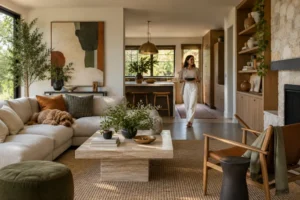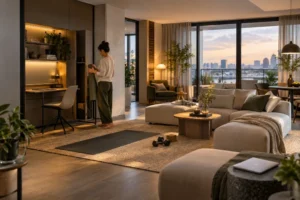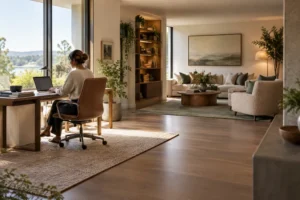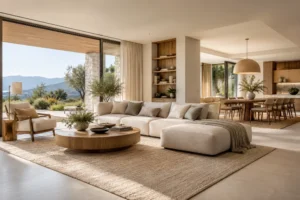
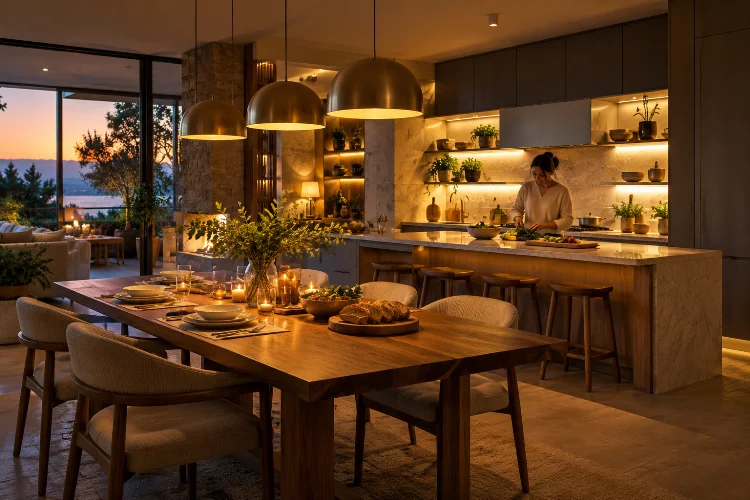
Lighting is one of those design elements people often notice only when something feels wrong.
A kitchen may look stylish but feel frustrating because the countertop is covered in shadows. A bedroom can have beautiful furniture yet feel strangely harsh under one bright ceiling fixture.
Good lighting design solves these problems by matching light to what actually happens in each space.
Understanding how lighting design transforms comfort across different rooms means looking beyond brightness alone.
Direction, color temperature, glare, daylight, fixture placement, and control all influence whether a room feels relaxing, practical, energetic, or uncomfortable.
The U.S. Department of Energy has long emphasized that good lighting design should match the amount and quality of light to the activity being performed rather than assuming that more light is always better.
Modern LEDs make that easier because they are efficient, versatile, and available in different color temperatures and fixture types.
The real trick is giving each room the light it actually needs.
1. Start With Layers Instead of One Bright Fixture
A comfortable room rarely depends on a single ceiling light.
Professional lighting design usually works better when different sources perform different jobs. Ambient lighting provides overall illumination, task lighting supports specific activities, and accent lighting adds depth or highlights architectural details.
Imagine a living room with only one strong ceiling fixture. Everything may technically be visible, but the room can feel flat and overly bright.
Now add a floor lamp beside the sofa, a table lamp near a reading chair, and subtle lighting around artwork or shelving. Suddenly, the space has multiple brightness levels and feels much more flexible.
This layered approach also allows you to illuminate only what you need.
Instead of turning the entire room bright just to read a book, you can switch on one focused lamp. Good lighting is therefore not simply brighter – it is more intentional.
2. Make Living Room Lighting Flexible
Living rooms are difficult because they serve many purposes.
You might watch television, read, talk with friends, work on a laptop, entertain guests, or simply relax in the same space.
That means lighting needs to adapt.
Warm light is often comfortable in residential and relaxation-focused environments. ENERGY STAR explains that lower correlated color temperatures, such as 2700–3000K, produce a warmer appearance, while higher Kelvin values create whiter or bluer light.
For a living room, combine soft general illumination with several smaller sources positioned around where activities occur.
A reading chair benefits from its own lamp. Shelving may benefit from subtle accent lighting. Television areas generally work better without an intense light source reflecting directly from the screen.
Dimmers are particularly useful because they allow the same room to shift from active family use to a softer evening enviroment without changing fixtures.
3. Give Kitchens Stronger Task Lighting
Kitchens need a different strategy because many activities involve precision.
Cutting vegetables, checking whether food is properly cooked, reading labels, measuring ingredients, and cleaning surfaces all become easier when work areas are clearly illuminated.
One common mistake is placing bright ceiling lights behind the person using the countertop. Their body then creates a shadow exactly where the light is needed.
Under-cabinet lights can solve this problem by directing illumination onto preparation surfaces.
The kitchen still needs ambient lighting, but task lighting should focus on high-use zones such as countertops, sinks, islands, and cooking areas.
Color quality matters as well.
The Color Rendering Index, or CRI, describes how accurately colors appear under a light source compared with a reference source. ENERGY STAR specifications for qualified downlights require a CRI of at least 80.
Better color rendering can be especially useful in kitchens where recognizing the appearance of ingredients and food is important.
4. Keep Bedroom Lighting Calm and Controllable
Bedrooms need enough light for practical activities without feeling like offices.
You may need bright illumination while dressing or cleaning, but that same intensity can feel uncomfortable when you are preparing to sleep.
The solution is flexibility.
Use general lighting when necessary, then provide smaller bedside or wall-mounted lamps for evening use. Warm, lower-intensity lighting can create a softer transition toward bedtime.
Light also plays a role in the body’s circadian system. WELL guidance recognizes light as an important cue for sleep-wake rhythms and recommends considering changes in light intensity and spectrum throughout the day.
That does not mean every bedroom needs an advanced circadian lighting system.
A simpler approach is often enough: enjoy daylight during the day, use stronger lighting when you need to be active, and reduce brightness toward bedtime.
Avoid placing intense uncovered lamps directly within your normal line of sight from the bed. Visual confort matters just as much as decorative style.
5. Design Bathroom Lighting Around the Face
Bathrooms often make another classic lighting mistake: placing one strong fixture directly overhead.
That can create deep shadows below the eyes, nose, and chin.
For activities such as shaving, makeup, skincare, or grooming, light positioned around the face generally provides more useful illumination.
Wall fixtures placed on either side of a mirror can reduce harsh shadows. Another option is a well-diffused illuminated mirror combined with general ceiling lighting.
Bathrooms may also need different lighting modes.
Bright task illumination is useful in the morning, while softer lighting can make nighttime visits less disruptive. In larger bathrooms, shower and bathing areas may require their own suitable fixtures.
Safety must always come first around water. Fixtures need to be appropriate for their location and installed according to applicable electrical requirements.
Lighting design should never sacrifice safety for appearance.
6. Use Focused Lighting in Home Offices
Home offices need enough light to support concentration without creating screen glare.
The WELL Building Standard emphasizes visual acuity, brightness management, daylight, and glare control as important parts of lighting design.
Start by thinking about the desk.
Natural light can make a workspace pleasant, but placing a computer directly opposite a bright window may create reflections. Sitting with the window immediately behind you can also produce glare on the screen.
A side-facing window is often easier to manage.
Then add a desk lamp for documents, handwriting, or detailed tasks. The goal is not to flood the entire office with excessive brightness, but to create enough focused illumination where work occurs.
Harvard’s Healthy Buildings guidance similarly recommends task lighting, access to daylight, exterior views, and glare management in work environments.
If one person shares the room with others, separate lighting controls can make the space more funcional throughout the day.
7. Use Daylight Without Letting It Control the Room
Natural light can completely change an interior.
It creates visual connection with the outdoors and can reduce reliance on artificial lighting. The U.S. Department of Energy notes that carefully planned windows and skylights can harvest daylight while helping reduce artificial-lighting energy use.
But more sunlight is not automatically better.
Direct sun can produce glare and unwanted heat, particularly through certain window orientations. Shades, screens, overhangs, curtains, and other controls can help manage these problems.
Furniture placement matters too.
A reading area placed beside a softly illuminated window may need little artificial light during the day. A desk exposed to direct afternoon sunlight might become nearly unusable without shading.
Good daylighting is therefore about balance.
You want enough natural illumination to make the room feel bright and connected to the outside without creating excessive glare or uncomfortable temperature changes.
8. Choose LEDs, Controls, and Color Temperature Carefully
LED technology offers enormous flexibility for residential lighting.
ENERGY STAR notes that LEDs can produce light much more efficiently than traditional incandescent bulbs and can also last significantly longer.
However, choosing LEDs only by wattage is a mistake.
Pay attention to lumens for brightness, Kelvin for color appearance, fixture direction, dimming compatibility, and color-rendering performance.
A warmer 2700–3000K appearance may suit bedrooms and living spaces, while somewhat cooler light may feel appropriate in kitchens, utility areas, or workspaces depending on personal preference and surrounding daylight.
Smart controls can take flexibility further.
Dimmers, occupancy sensors, timers, and tunable fixtures allow lighting conditions to change without installing multiple permanent systems.
The important principle is consistant control: every room should give users an easy way to adjust lighting to the task, time of day, and mood.
Lighting design transforms comfort because different rooms ask people to do very different things.
A kitchen needs clear task illumination, a bedroom needs softer evening light, a home office must manage glare, and a living room benefits from flexible layers.
Instead of choosing fixtures only because they look attractive, think about how each area is used throughout the day. Combine ambient, task, and accent lighting, take advantage of daylight, manage glare, and choose color temperature intentionally.
Start with the room that currently feels least comfortable.
You may not need a major renovation. Adding one task lamp, installing a dimmer, repositioning furniture near daylight, or replacing an overly harsh bulb can sometimes change the entire experience of a space.