Grace Mitchell

Advanced Behaviour Design for Breaking Repetitive Bad Habits

Advanced Behaviour Design for Breaking Repetitive Bad Habits

Bad habits can be surprisingly stubborn. You may know that late-night scrolling ruins your sleep, constant snacking is not helping your goals, or opening social media every ten minutes destroys your concentration – yet the behavior keeps returning. That does not necessarily mean you lack discipline. Many repetitive behaviors become strongly connected to particular situations, emotions, locations, or cues. Research on habit psychology suggests that when actions are repeated in stable contexts, those contexts can begin triggering the response with ...


How Sleep Quality Shapes Healthy Ageing and Daily Performance

How Sleep Quality Shapes Healthy Ageing and Daily Performance

Sleep is easy to underestimate because it looks like nothing is happening. You close your eyes, lie still for several hours, and then get back to life. But behind the scenes, the brain and body are doing important work that affects how you think, move, recover, and function the next day. That makes sleep quality a major part of both healthy ageing and everyday performance. Good sleep is not simply about spending eight hours in bed. Healthy sleep also involves ...

Why Habit Systems Work Better Than Short-Term Motivation

Why Habit Systems Work Better Than Short-Term Motivation

Motivation feels powerful when it arrives. You suddenly want to exercise every morning, clean up your diet, read twenty books, save more money, and completely reorganize your life before next Monday. Then Thursday happens. Work gets busy, you sleep badly, an unexpected problem appears, and the motivation that felt unstoppable a few days earlier quietly disappears. This is one reason relying entirely on motivation can make long-term behavior change frustrating. Habit systems work better than short-term motivation because they reduce ...

Building Identity-Based Habits That Survive Busy Life Changes

Building Identity-Based Habits That Survive Busy Life Changes

Most habits are easy when life is predictable. You exercise because the gym is beside your office, meal-prep every Sunday, and read before bed because your evenings usually look the same. Then something changes. You move house, start a new job, have a baby, begin traveling more often, switch work schedules, or suddenly face several stressful weeks. The routines that once felt automatic can disappear surprisingly fast. That is where identity-based habits become useful. Instead of building a routine only ...

How Environment Design Makes Positive Habits Easier to Maintain

How Environment Design Makes Positive Habits Easier to Maintain

Most people approach habit change by asking one question: “How can I become more disciplined?” It sounds reasonable, but it puts almost all the responsibility on motivation and self-control. There is another approach. Change the environment around the behavior. Where your phone sits, what food you see first, how easy your workout clothes are to reach, and even where your desk faces can quietly influence what you do next. Habit research shows that repeated actions in recurring contexts can become ...

Advanced Habit Design for Sustainable Lifestyle Transformation

Advanced Habit Design for Sustainable Lifestyle Transformation

Changing your lifestyle sounds simple on paper. Exercise more, eat better, read regularly, spend less time scrolling, sleep earlier, and somehow remain consistent through busy weeks, travel, stress, and unexpected problems. The difficult part is rarely knowing what to do. It is designing everyday life so the better behavior keeps happening when motivation disappears. That is where advanced habit design for sustainable lifestyle transformation becomes useful. Instead of treating behavior change as a test of discipline, habit design looks at ...

Creating Functional Homes Without Sacrificing Visual Identity

Creating Functional Homes Without Sacrificing Visual Identity

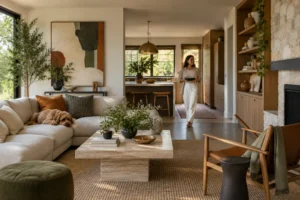
A home can look incredible in photographs and still be frustrating to live in. Maybe the beautiful coffee table constantly blocks the walkway, the open shelves collect clutter, or the carefully styled kitchen has almost nowhere to prepare dinner. On the other hand, a highly practical home can sometimes become so focused on efficiency that it loses personality. The real challenge is finding the middle ground. Creating functional homes without sacrificing visual identity means designing spaces that support everyday routines ...

How Lighting Design Transforms Comfort Across Different Rooms

How Lighting Design Transforms Comfort Across Different Rooms

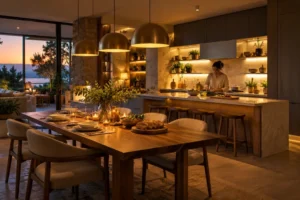
Lighting is one of those design elements people often notice only when something feels wrong. A kitchen may look stylish but feel frustrating because the countertop is covered in shadows. A bedroom can have beautiful furniture yet feel strangely harsh under one bright ceiling fixture. Good lighting design solves these problems by matching light to what actually happens in each space. Understanding how lighting design transforms comfort across different rooms means looking beyond brightness alone. Direction, color temperature, glare, daylight, ...

Flexible Living Spaces for Modern Hybrid Lifestyles

Flexible Living Spaces for Modern Hybrid Lifestyles

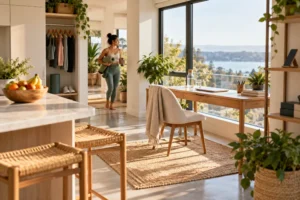
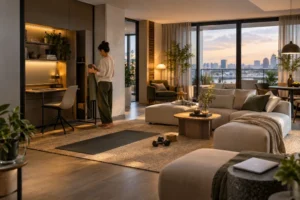
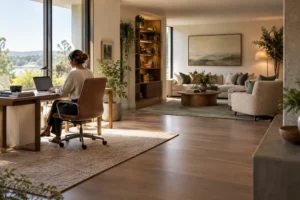
The modern home has become much more than a place to eat, sleep, and relax. For many people, it is now an office, classroom, workout space, entertainment zone, creative studio, and social hub – sometimes all within the same day. That shift creates a design challenge. A room that works perfectly for a quiet Sunday morning may feel completely wrong during a video meeting on Monday afternoon. This is why designing flexible living spaces for modern hybrid lifestyles has become ...

How Interior Layout Influences Mood, Focus, and Daily Behaviour

How Interior Layout Influences Mood, Focus, and Daily Behaviour

Have you ever walked into one room and immediately felt relaxed, while another made you restless without knowing exactly why? The difference may have less to do with expensive furniture and more to do with how the space is arranged. Interior layout quietly influences how people move, communicate, concentrate, rest, and complete everyday tasks. Furniture placement can encourage conversation or privacy. A poorly positioned desk can expose you to constant distractions, while a clear pathway can make everyday routines feel ...